

Improving soil health through regenerative gardening at Conestoga
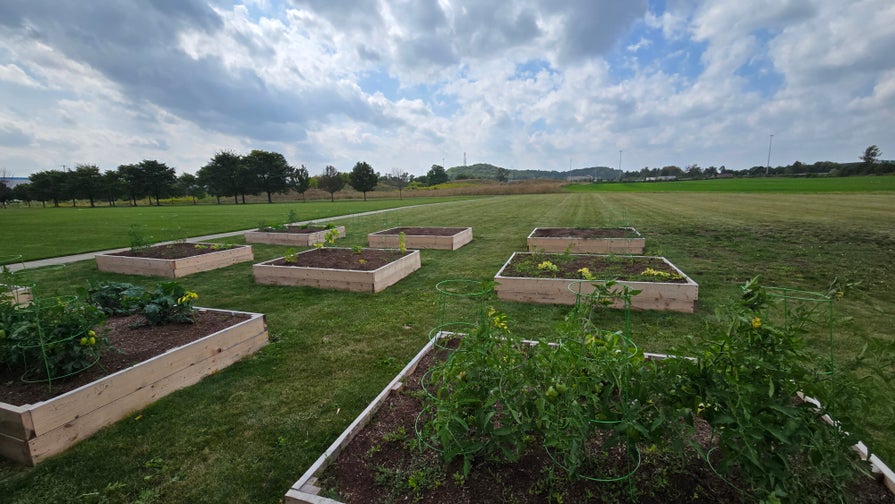
Using soil science to strengthen food production, resilience, and sustainability in Conestoga’s Cambridge campus community garden
Anthony Bauer, BioHub
About the project
Conestoga’s Biotechnology Research & Innovation Hub (BioHub) examined soil conditions in the Cambridge campus community garden to better understand challenges affecting plant growth and long-term productivity. The project used seasonal soil analysis to develop evidence-based regenerative gardening practices tailored to the site.
The challenge
Early observations of the newly established garden identified poor crop performance and potential soil degradation. The constructed soils contained high levels of wood-chip mulch and limited mineral soil, contributing to conditions including high alkalinity and poor water accessibility. A better understanding of the soil was needed to support reliable food production and long-term soil health.
Approach
- Conducted seasonal sampling across garden beds, potential expansion areas, and nearby reference fields
- Assessed physical and chemical properties including pH, moisture, bulk density, nutrients, and metals
- Evaluated biological soil health through measurements of bacterial and fungal abundance
- Identified factors limiting crop productivity and soil resilience
- Developed regenerative gardening recommendations based on the findings
Results
- Produced a technical report documenting the garden’s physical, chemical, and biological soil conditions
- Developed a tailored five-year regenerative gardening plan for the community garden
- Recommended strategies for balancing organic and mineral soil, crop rotation, cover crops, water accessibility, and microbial activity
- Created educational materials and delivered a community workshop
- Established an evidence-based framework to guide future garden management and potential expansion
Why it matters
- Supports more reliable and sustainable community food production
- Promotes healthier soil, improved water management, and greater biodiversity
- Strengthens campus food security and sustainability initiatives
- Creates opportunities for experiential learning and applied environmental research
- Provides a regenerative gardening model that could inform other urban and institutional growing spaces